Movieverse 480p 720p 1080p ((link)) Online
Small smartphone screens, older tablets, and users with limited data plans.
High-definition video (1080p) often comes paired with 5.1 Surround Sound. Use headphones or external speakers to match the visual quality.
Often called "HD Ready," 720p is the entry point for high-definition viewing. It offers a significant jump in clarity over 480p, showing sharper textures and better color depth. It is the ideal middle ground for those who want quality without downloading massive file sizes. 3. 1080p (Full High Definition - FHD) Movieverse 480p 720p 1080p
This is the industry standard for high-quality streaming. At 1080p, you see the fine details intended by the director—from the grain of sand in a desert shot to the subtle expressions on an actor's face. It requires a stable, high-speed connection but offers the most immersive experience. Why Resolution Variety Matters in a Movieverse
Older hardware often struggles to process high-bitrate 1080p files, leading to lag. Matching the resolution to your processor ensures a glitch-free night. Tips for the Best Viewing Experience Small smartphone screens, older tablets, and users with
Large monitors, modern TVs, and home theater setups.
Regardless of the resolution you choose, you can improve your movie night with a few simple tweaks: Often called "HD Ready," 720p is the entry
The search for highlights a diverse community of viewers. Whether you are a cinephile demanding the crispness of Full HD or a casual viewer looking for a quick download on the go, understanding these formats ensures you never have to compromise on your entertainment.
Not everyone has unlimited fiber internet. 480p allows users on metered connections to enjoy cinema without hitting data caps.
When browsing a movieverse of content, the "p" stands for progressive scan. The number represents the vertical resolution of the video. Here is how they stack up: 1. 480p (Standard Definition - SD)
Small smartphone screens, older tablets, and users with limited data plans.
High-definition video (1080p) often comes paired with 5.1 Surround Sound. Use headphones or external speakers to match the visual quality.
Often called "HD Ready," 720p is the entry point for high-definition viewing. It offers a significant jump in clarity over 480p, showing sharper textures and better color depth. It is the ideal middle ground for those who want quality without downloading massive file sizes. 3. 1080p (Full High Definition - FHD)
This is the industry standard for high-quality streaming. At 1080p, you see the fine details intended by the director—from the grain of sand in a desert shot to the subtle expressions on an actor's face. It requires a stable, high-speed connection but offers the most immersive experience. Why Resolution Variety Matters in a Movieverse
Older hardware often struggles to process high-bitrate 1080p files, leading to lag. Matching the resolution to your processor ensures a glitch-free night. Tips for the Best Viewing Experience
Large monitors, modern TVs, and home theater setups.
Regardless of the resolution you choose, you can improve your movie night with a few simple tweaks:
The search for highlights a diverse community of viewers. Whether you are a cinephile demanding the crispness of Full HD or a casual viewer looking for a quick download on the go, understanding these formats ensures you never have to compromise on your entertainment.
Not everyone has unlimited fiber internet. 480p allows users on metered connections to enjoy cinema without hitting data caps.
When browsing a movieverse of content, the "p" stands for progressive scan. The number represents the vertical resolution of the video. Here is how they stack up: 1. 480p (Standard Definition - SD)
 Short DiffEngineX Guide
 Viewing The Results
Compare Text
New! If you write any kind of document from contracts to articles and you want to see the changes, get our other product TextDiff.
tip
Click here for a tip on how to make viewing the results much easier.
tip #2
If you see an error message stating Microsoft Excel may not be installed, you may need to repair your installation of Microsoft Office. For more details click here.
tip #3
In order to just see the new (green) or deleted (red) rows in both color highlighted worksheets, you can make use of Excel's built-in Filter capability. Just create a filter and then select a column to filter on Cell Color.
tip #4
If comparing rows of data, you may need Excel's Data tab to pre-sort. Then re-save before invoking DiffEngineX.
tip #5
If your region, language, location, date, time or number format settings have been altered or do not match the language version of Excel, you may need to turn on the DiffEngineX Internationalization option to stop errors.
tip #6
If you turn on Add Hyperlinks to aid navigation, the links work best if the workbooks being compared are initially closed (only applies to Excel 2003). For more details click here.
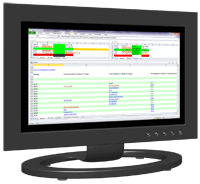
Report Screenshot