

Upload a photo, sketch, or reference image and generate a textured 3D model for games, prototyping, or 3D printing in seconds.
Upload a photo or reference image and generate a complete 3D model in seconds.
Convert a drawing, sketch, logo, or flat design into beautiful 3D model.

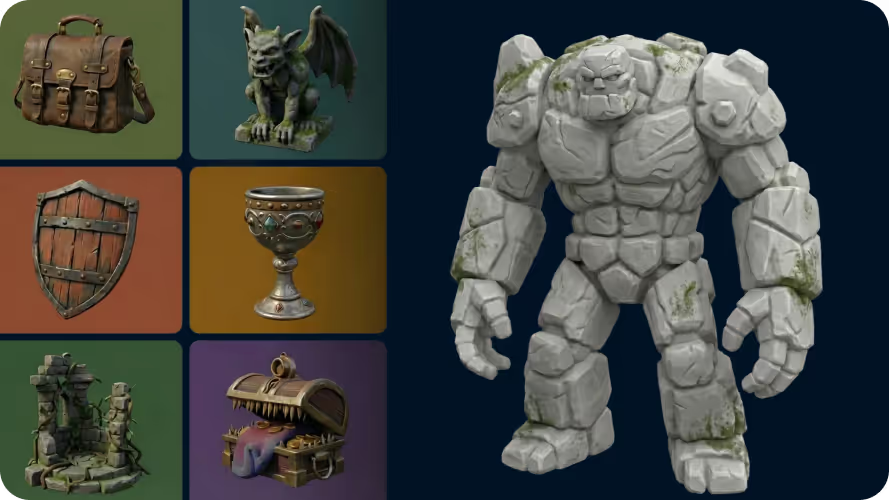

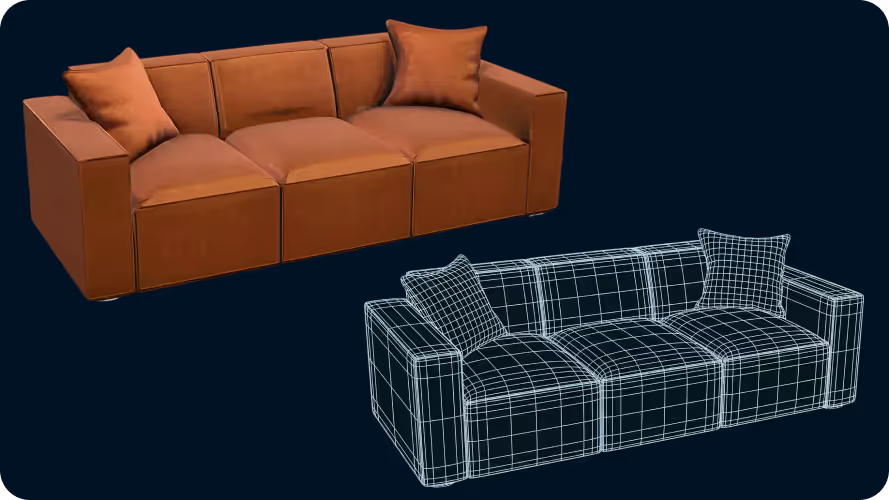

Export clean .fbx, .glb, or .obj files that drop straight into Unity, Unreal, Godot, Roblox Studio, and more.

Get watertight models with solid forms that print well, even at small sizes.
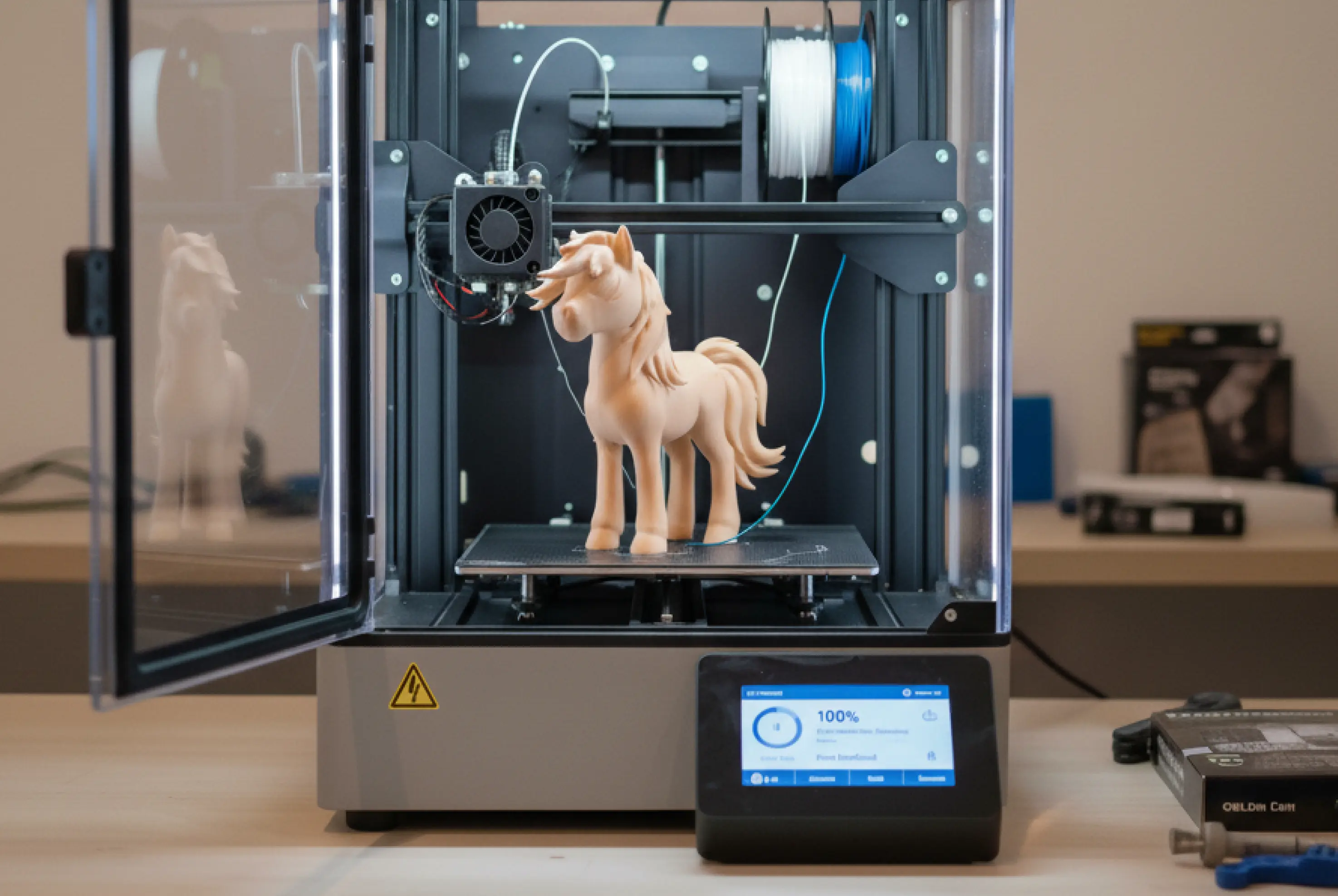
Specify if you want a .
Forgetting Remember that vertical elevation changes significantly impact the total pressure requirement.
Unstable flow (Reynolds number 2000–4000).
Used primarily for water distribution systems. Continuity Equation: (Flow rate equals Area times Velocity). 2. Optimal Pipe Sizing Strategy
The allowable pressure drop is typically dictated by the available "energy budget" of the pump or compressor. In most process plants, a rule of thumb is a pressure drop of 1–2 psi per 100 feet of pipe. 3. Pressure Rating and Wall Thickness
Generally 1.5 to 3.0 m/s (5–10 ft/s) to prevent erosion and water hammer.
Choosing a pipe that is too small leads to excessive pressure drop and noise, while a pipe that is too large increases material and support costs. Velocity Limitations
Mastering process piping requires a deep understanding of how fluids behave under pressure and how to select materials that ensure system integrity. This guide explores the core principles of hydraulic sizing and pressure rating, specifically tailored for engineers seeking advanced technical insights into piping design. 1. Fundamentals of Piping Hydraulics
