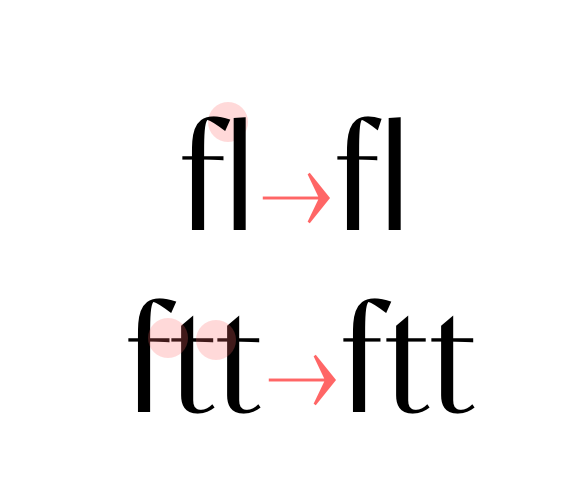
• smart f variants to avoid collisions,
• T T ligature,
• anti-collision T (rightside),
• variants of f and t horizontal bar when next to each other (ff, tt, ft, tf, ttt, fff…)
Published on: 25th of May 2021
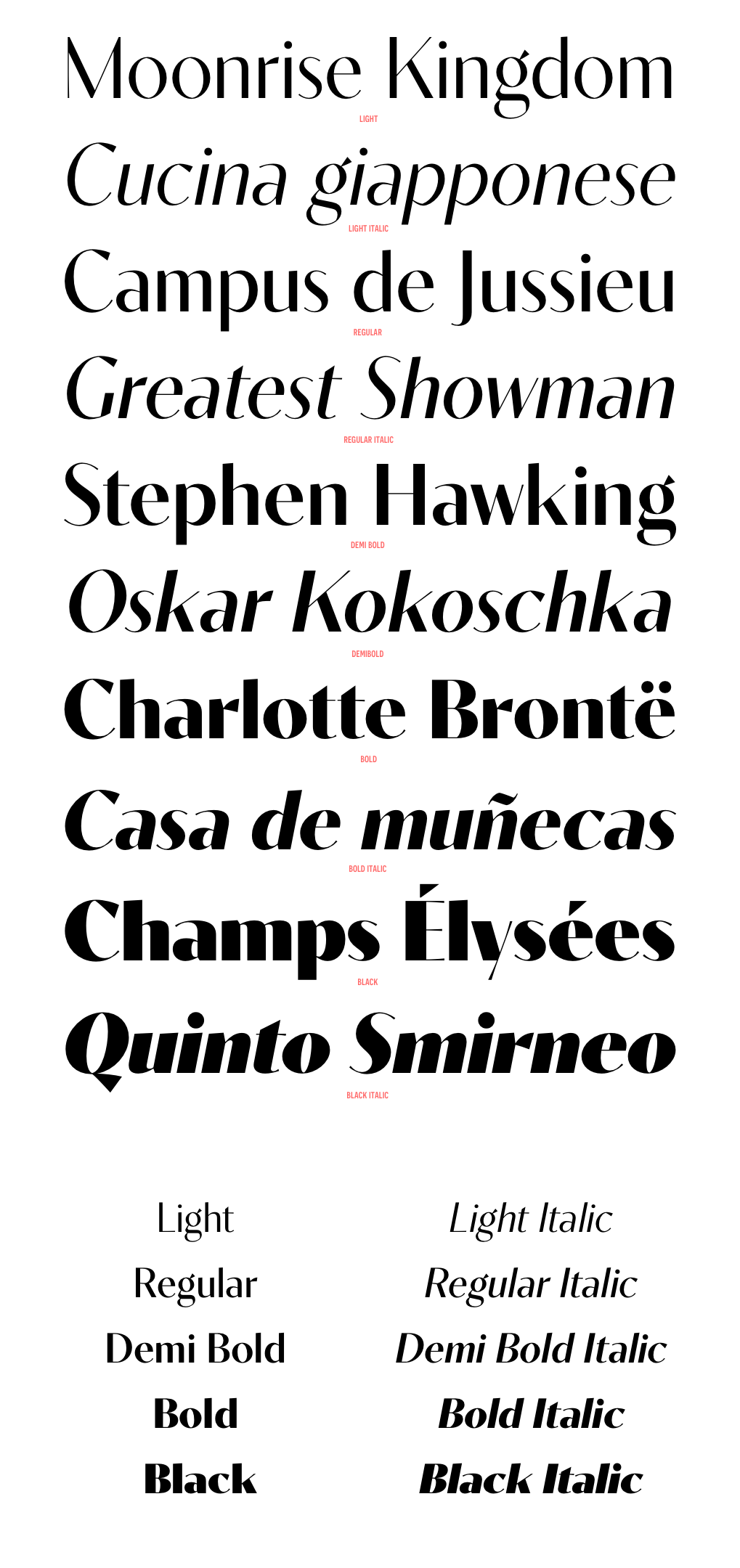
Contralto is a high contrast sans-serif font family, crafted to look elegant but contemporary thanks to soft humanist shapes mixed with sharp geometric details.
Contralto comes in 40 styles: 5 weights × italics × 4 optical sizes, to help optimising contrast and readability. However, you can also use them to fine tune the mood of your graphical composition.
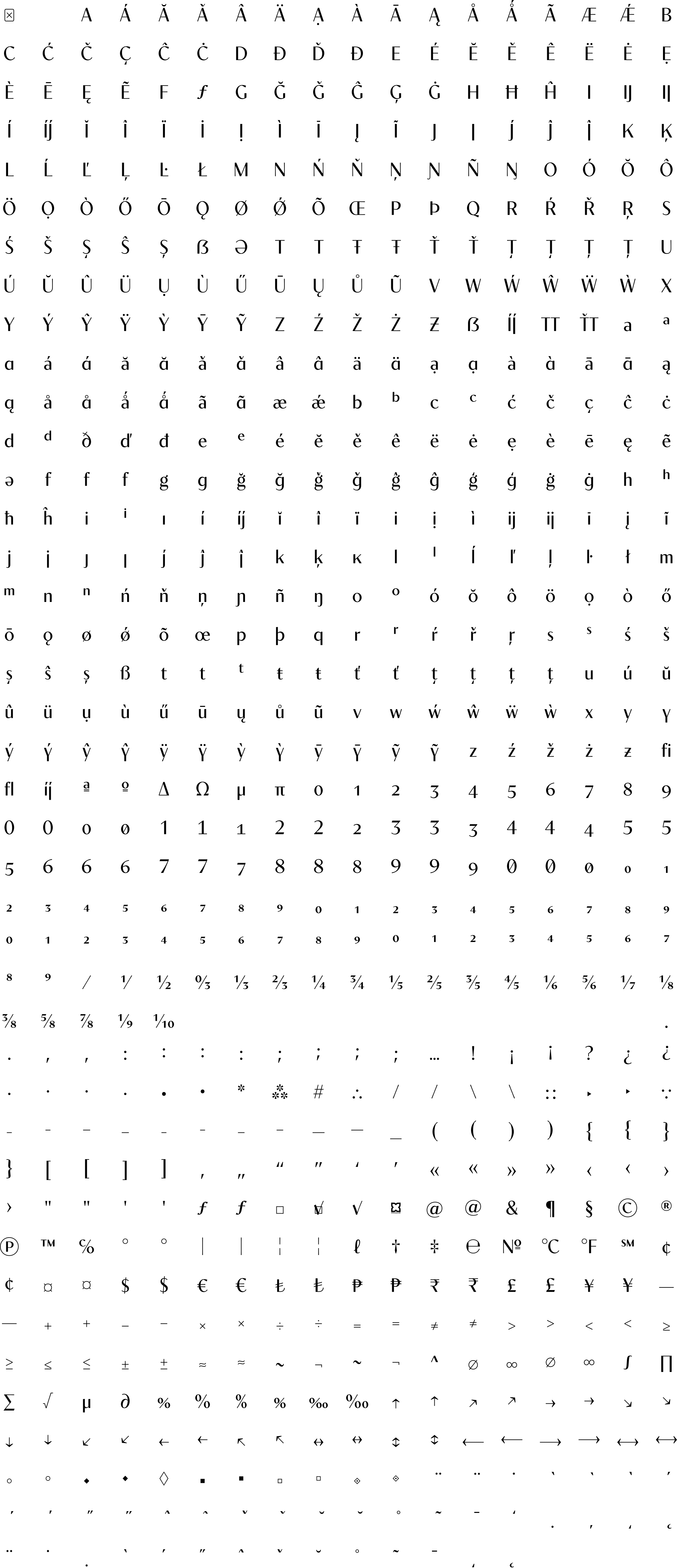
Contralto’s generous character set and Opentype features let you meet the most demanding layout needs and lets your creativity fly!
Download the Contralto Specimen -->


| light | regular | demibold | bold | black | light italic | regular italic | demibold italic | bold italic | black italic | |
|---|---|---|---|---|---|---|---|---|---|---|
| big | ![]() |
![]() |
![]() |
![]() |
![]() |
![]() |
![]() |
![]() |
![]() |
![]() |
| medium | ![]() |
![]() |
![]() |
![]() |
![]() |
![]() |
![]() |
![]() |
![]() |
![]() |
| small | ![]() |
![]() |
![]() |
![]() |
![]() |
![]() |
![]() |
![]() |
![]() |
![]() |
| xsmall | ![]() |
![]() |
![]() |
![]() |
![]() |
![]() |
![]() |
![]() |
![]() |
![]() |
![]() anticollision ligatures Standard ligatures (should be always on). • smart f variants to avoid collisions, • T T ligature, • anti-collision T (rightside), • variants of f and t horizontal bar when next to each other (ff, tt, ft, tf, ttt, fff…) |

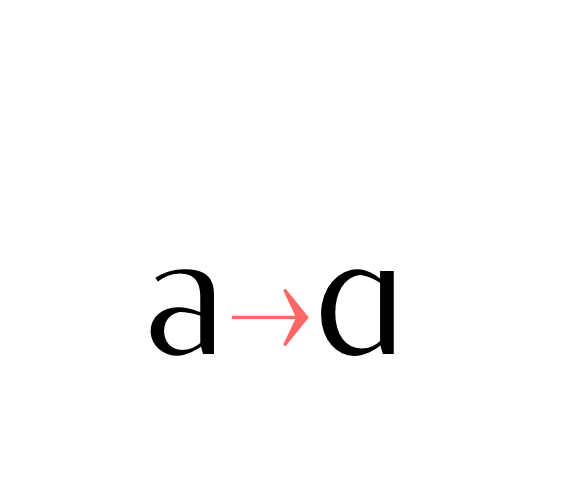
![]() Alternate a (ss01) Stylistic set 01: Alternate lowercase a glyph. |
![]() Alternate g (ss02) Stylistic set 02: Alternate lowercase g glyph. |
![]() Alternate j (ss03) Stylistic set 03: Alternate lowercase and uppercase j glyph. |
![]() Alternate y (ss04) Stylistic set 04: Alternate lowercase y glyph. |
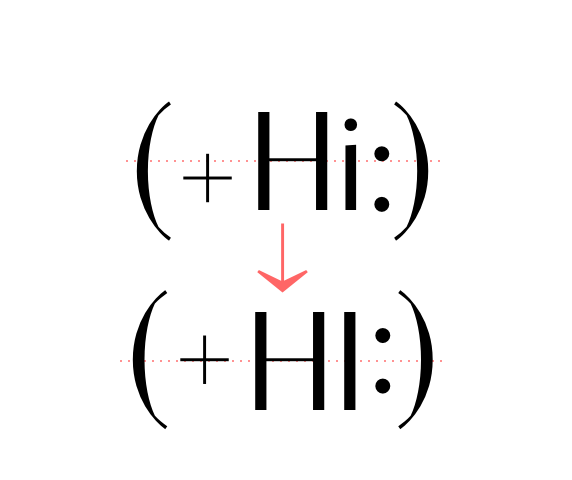
![]() case sensitive forms Displays a version of the glyph that matches uppercases. Case sensitive glyphs are: ß 0 1 2 3 4 5 6 7 8 9 : ; · • ◦ ‣ ◆ ■ □ ▣ ( ) { } [ ] - – — ⎯ « » ‹ › ¢ ¤ $ € ƒ ₺ ₱ ₹ £ ¥ + − × ÷ = ≠ > < ≥ ≤ ± ≈ ~ ¬ ∅ ∞ % ‰ ↑ ↗ → ↘ ↓ ↙ ← ↖ ↔ ↕ ⟵ ⟶ ⟷ |
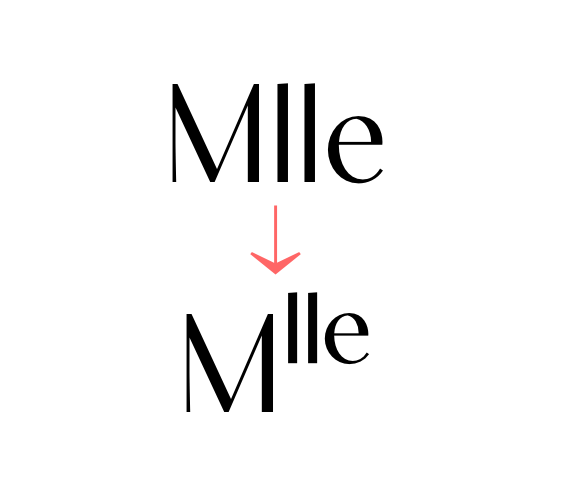
![]() ordinals Creates ordinal versions for letters a b c d e h i l m n o r s t. If a or o are preceded by a figure and no letter follows, ordfeminine ª and ordmasculine º are displayed instead. |
![]() arrows (ss06) Stylistic set 06 “Arrows”. Transforms: -> to →, <- to ←, --> to ⟶, <-- to ⟵, <-> to ↔, <--> to ⟷, ^- to ↑, -^ to ↓, ^-^ to ↕, /> to ↗, </ to ↙, \> to ↘, <\ to ↖, -- to ⎯ (double hyphen makes a longer arrow, sizing exactly 2 tabular spaces). |
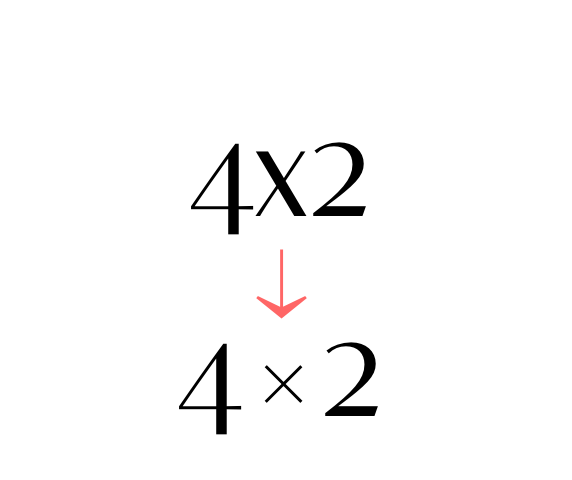
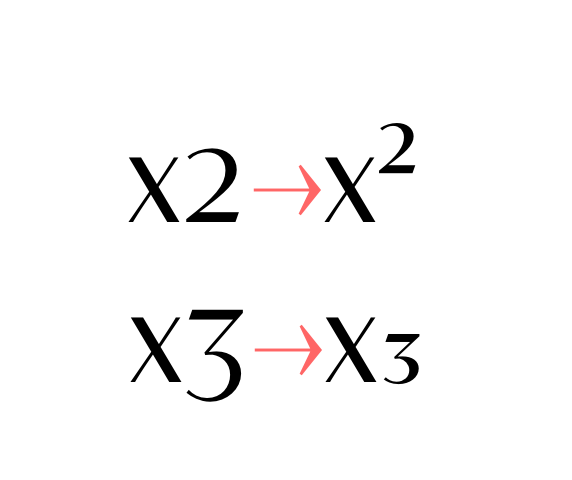
![]() contextual alternates Transforms the x letter to the multiply sign (×) when between two figures and/or an extra space. |
![]() slashed zero Activates slashed-zero alternate |
![]() lining & oldstyle figures Lining figures: displays uppercase-aligned figures and case sensitive glyphs: ß 0 1 2 3 4 5 6 7 8 9 : ; · • ◦ ‣ ◆ ■ □ ▣ ( ) { } [ ] - – — ⎯ « » ‹ › ¢ ¤ $ € ƒ ₺ ₱ ₹ £ ¥ + − × ÷ = ≠ > < ≥ ≤ ± ≈ ~ ¬ ∅ ∞ % ‰ ↑ ↗ → ↘ ↓ ↙ ← ↖ ↔ ↕ ⟵ ⟶ ⟷ Oldstyle figures: displays lowercase (default) figures and glyphs. |
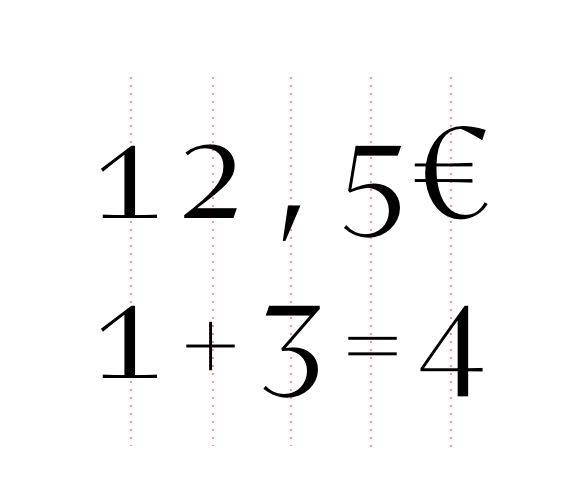
![]() tabular figures & symbols Switches figures and some related glyphs to tabular ones. This feature makes the target glyphs same width and aligns them vertically as they were inside a table. Tabular glyphs are: π … # _ ⎯ ¢ $ € ƒ ₺ ₱ ₹ £ ¥ + − × ÷ = ≠ > < ≥ ≤ ± ≈ ~ ¬ ∅ ∞ ∫ √ µ ∂ ↑ ↗ → ↘ ↓ ↙ ← ↖ ↔ ↕ ◊ ☐ ☑ ✓ Glyphs with tabular alternates: 0 1 2 3 4 5 6 7 8 9 . , : ; · " ' ° | ¦ % / \ - (and space). Most of them have case-sensitive alternates too. In this font you’ll also find 3 long arrows ⟵ ⟶ ⟷ with their case sensitive alternate. Their length is exactly twice a tabular. |
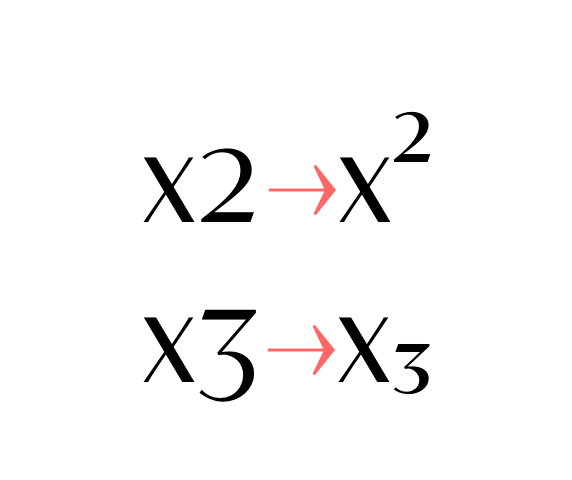
![]() superscripts & subscripts Activates superscript and subscript figures independently. |
![]() numerators & denominators Activates numerator and denominator figures independently. |
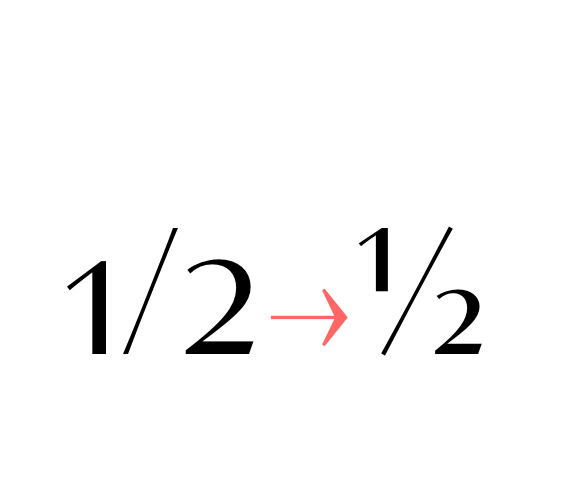
![]() fractions Real fractions from any [number] slash [number] sequence. |
The "22 05" designation often refers to specific content batches that emphasize high-production value. In popular media, we’ve seen a massive shift toward this aesthetic. Shows on networks like HBO or platforms like A24 have adopted a "cinematic realism" that mirrors the lighting and composition styles popularized by high-end glamour photography sites.
The "membership model" used by niche photography sites was a precursor to the Netflix and OnlyFans models we see dominating the economy today. The Verdict
While the specific phrase "Femjoy 22 05" may look like a technical archive code or a specific release date, it represents a deeper intersection between high-end digital photography, the evolution of adult entertainment, and how popular media consumes "glamour" content. femjoy 22 05 28 diana rider first light xxx xvi high quality
Whether it’s through lighting, subscription models, or the emphasis on natural beauty, the DNA of high-end photography platforms is woven into the fabric of our modern digital experience.
Popular media now relies on deep metadata to recommend content to users based on subtle aesthetic preferences. 3. The Influence on Social Media Aesthetics The "22 05" designation often refers to specific
The string "22 05" highlights the technical side of modern media: As entertainment libraries grow into the petabytes, how media is tagged and categorized becomes vital.
The "entertainment content" of the past has effectively become the "social media blueprint" of the present. 4. Consumption Habits: Then vs. Now The "membership model" used by niche photography sites
In the modern digital landscape, the distinction between "entertainment content" and "popular media" has blurred. Here is an exploration of how platforms like Femjoy have influenced—and been influenced by—the broader media ecosystem. Femjoy and the Evolution of Modern Entertainment Content
The keyword "Femjoy 22 05 entertainment content and popular media" serves as a bridge between the niche artistic photography of the past and the mainstream digital aesthetics of today. It reminds us that what begins as "niche content" often sets the visual standards for the "popular media" of the next decade.
In the era of "22 05" (referencing the mid-to-late 2000s growth), media was often downloaded or viewed on desktops. Today, popular media is: Content is optimized for vertical viewing.